Latest news of music and much more about musical world

N-Dubz singer diagnosed with swine flu


The lead singer of chart-topping drum 'n' bass group N-Dubz has been diagnosed with swine flu after collapsing on a flight to Greece. Tulisa Contostavlos flew from London to Athens on Thursday for a family holiday, but fell ill on the plane.

The 20-year-old star subsequently contacted a doctor and was admitted to hospital in the city of Pendeli, Greece on Friday after being diagnosed with the deadly virus.

Contostavlos is being kept in an isolation ward, but is said to be making good progress, according to The Sun.

A spokesman for the band tells the publication, "We are hopeful Tulisa will be given the all-clear and will be well enough to leave hospital in the next couple of days.”

The health crisis has already claimed the lives of more than 100 people in Mexico City, where the virus is thought to have originated.

Nokia 5800 Comes With Music Is Available In The Brazilian Market

Nokia announces the start of offering Nokia 5800 Comes With Music, which brings to Brazil the revolutionary music download service, by which consumers will be able to download millions of tracks unlimitedly. Nokia 5800 is the first product to receive the service, a 3.2" widescreen touch screen model, which already sold 3 million units since its arrival in the market in November of last year*.

Starting today, the device is available for purchase at Nokia Store SP (Rua Oscar Freire, 849) and at Nokia's online store (www.nokia.com.br/loja). TIM will be the only operator to sell the solution during first month of launch. Customers that were already registered on the available pre-sales opportunity at the online store will receive their devices at home by this week's end.

By purchasing the device, customer is immediately entitled to enable the Comes With Music service and start exploring and downloading more than three million tracks of international and Brazilian artists, unlimitedly, for one year, thanks to agreements signed with the four of the world's largest labels and hundreds of independent labels. Downloads can be made via PC, as well directly to the Nokia 5800 device. When this period comes to an end, consumers will be able to keep all tracks on their computers and mobile devices. For video tutorials on how to help users to activate and use the service, please log on to www.nokia.com.br/musica.

In Brazil, the list of labels include: Tratore, Som Livre, Deckdisc, ST2, Building Records, Atração, among others. The local music content represents a very important component inside the catalog, to both, the domestic audience, and enthusiasts of the Brazilian music throughout the world where Comes With Music is available.

As a special launching offer, when acquiring Nokia 5800 with the unlimited data package, TIM's customers will receive two months of free download of music, games, videos and other content, access to the Internet and they will be able to read emails without paying anything for data transfer. Nokia 5800 Comes With Music costs BRL 399.00 when signing for the TIM Brasil 250 plan, plus the mobile device unlimited data package.

"We know that the Brazilian consumer is among the world's top consumers of national music, consequently we made sure to contact major labels and local independent labels as well," says Almir Narcizo, president of Nokia Brazil. "With Nokia 5800 Comes With Music we are making available the opportunity to have access to this content to them and to everyone that enjoys our music, with a product that will revolutionize the ways of digital consumption," concluded Narcizo.

"We are focused on bringing first hand great news to customers, increasing our portfolio to satisfy the various users' profiles. With Nokia 5800, we are confident about our special promotion: we offer two months of free unlimited data transfer so that all our customers might experience all Internet services and direct download to the device," states Rogerio Takayanagi, Marketing director for TIM Brasil.

Finnish teacher unlocks music for special-needs students

Jamming on keyboards, bass guitar, and drums, four young men fill a basement room with harmony. The only unusual items here are the colorful squares, triangles, and circles up on a magnet board. The symbols are stand-ins for conventional musical notes – the keys that have unlocked music for the students here.
ADVERTISEMENT

The Special Music Center Resonaari has a humble, cozy setting – a converted two-story home in Finland's capital. But for the 170 people with intellectual or developmental disabilities who take music classes here each week, it's a place where their talents, not their special needs, take center stage.

For music teacher Markku Kaikkonen, the director, it's also the nucleus of a "cultural revolution."

"Our pupils, many of them, have lived in the margin of society. But now, with the help of ... music education, they are coming closer and closer to the center of society," Mr. Kaikkonen says, leaning forward with excitement, his brown hair hanging loosely about his shoulders.

The effects spread far beyond the students, Kaikkonen says. They change attitudes among families, neighbors, and the audiences who see them perform.

Figurenotes, a system of notation and teaching, has been developed and tested over the past decade by Kaikkonen and codirector Kaarlo Uusitalo. Students learn to play by matching the symbols to keys on a piano or frets on a guitar. Colors indicate notes, shapes show the octave, and arrows show sharps and flats. It's a simple way to convey all the information in traditional notation.

The Figurenotes method has spread to Japan, Estonia, and Scotland.

"What they're teaching us is that people with learning disabilities are capable of doing so much more in terms of their musical ability than what we previously knew," says Brian Cope, artistic director of Drake Music Scotland, a charity that uses Figurenotes in both mainstream and special education.

Students often arrive with no concept of rhythm, melody, or other basics. Some can use only one finger to play. Others are very shy. It can take years to reach the point of performing in annual concerts, which draw hundreds. Kaikkonen and his teachers patiently rejoice in every step of progress.

"In the beginning, it's only colors and symbols, but then suddenly it starts to be music, and it's the miracle moment," Kaikkonen says. "When a person is playing for the first time in his life, and he understands, 'I played music!' ... I call it the big-smile effect." It kicks off a lifelong cycle of learning, he says.

When student Marko Koivu arrived for classes about 10 years ago, he had only two friends: his mother and a nurse. "He was a really passive boy," Kaikkonen recalls.

Before long, Marko was learning to play the keyboard. "His mother called to say, 'Marko is teaching me how to play chords. Are these real chords?' " Kaikkonen says. "It was a great moment ... when the son ... had knowledge about something that the mother didn't know anything about."

Marko started exploring bus routes to rehearsals, instead of relying on his free taxi card. He befriended some famous Finnish musicians, who joined him and other Reso­naari students onstage.

"Music is my life," he says. "When we have concerts, it is giving me a good feeling."

Kaikkonen studied music education and music therapy at Helsinki's prestigious Sibelius Academy long before good methods for teaching music to the disabled had been found. But as a teacher at a secondary school and as a music therapist at a mental hospital, he learned to turn chaos into order among students with behavioral problems. And two "master teachers" showed him how to bring out people's hidden talents.

"When working with special-needs people, Markku treats them with respect and humanity, with trust in their potential," writes Ulla Hairo-Lax in an e-mail interview. A music teacher and researcher in Helsinki, she has observed his work and credits him with "boundless 'innovativeness' " and a "hilarious sense of humor."

Kaikkonen joins Marko's band practice, tapping a plaid-slippered foot on a set of bongos on the floor, his hand tucked into a back pocket of his black jeans. Mr. Uusitalo leads the group as they play (and sing in Finnish) John Fogerty's zesty "Proud Mary."

Perhaps they'll perform it at the next concert. The Resonaari players' professionalism, and their ties to the well-known artists who perform with them, are central to Kaikkonen's "cultural revolution."

They challenge people's notions of who can be a musician, he says. "People are coming because the music is so good. For the audience, it is the moment when they start to think [about] the power of these people." Maybe they look a bit different, but what the audience finds isn't a needy person. It's a "person who is as talented as anybody."•

Foot-Tapping & High Fiddling of Quebec's Genticorum


Traditional Quebecois music first came to my attention when I saw a Quebecois ensemble perform at the university I was attending. The second time, Quebecois captured my attention was when I watched the Quebecois classic film, “My Uncle Antoine” by Claude Jutra. A scene that took place in the country store, where most of the film’s action also took place, the town’s people kick up their heels to folksy Quebecois music. This musical tradition revisited me at WOMAD USA in 2001, when the original lineup of Matapat performed and gave a demonstration of the traditional instruments and step dancing that makes up this French-language music.

What’s not to love about this lively musical fare that combines humor, pathos, passionate fiddles, lyrical passages and rhythms played out on feet? This is one tradition that shows no signs of dying, unlike many folk traditions around the world. I have already heard numerous recordings by Quebecois luminaries and by newly emerging young groups. I am not sure which group Genticorum currently fits, since this is the first time I have heard of this trio. The musicians perform this traditional music like veterans.

Genticorum’s American release, “La Bibournoise” combines storytelling with top-notch fiddle playing, flute guitar, bass, flute and call & response vocals. A jew’s harp provides that necessary twang/drone and Pascal Gemme (vocals, fiddle), provides rhythm through his feet. Rounding off the trio are Yann Falquet (guitar, jew’s harp and voice) and Alexandre Moulin de Grosbois-Garand (wooden flute, fretless bass, fiddle and voice).
Similar to Matapat and Le Vent du Nord, these musicians are out to have a good time. They perform rollicking jigs and sing songs about a naughty priest, a prison made out of food that would cause a vegan to cringe, and a husband that accidentally wears his wife’s lover’s pants. (English interpretations of the lyrics are provided). Some of the ballads here such as, “Le Vingt D’ Avril” (The 5th of April), “Hommage A Andrè Alain” (a late great fiddler), and “J’y Vas Mon Train” remind me of Scandinavian folk. And the a cappella titular track gets my feet tapping every time.

Genticorum has been collecting praise from top folk and roots publications and the trio has toured in over 15 countries. This foot tapping, high-fiddling trio should not be missed.

Patricia Herlevi hosts the healing music blog, The Whole Music Experience, where she gives Quebecois music a high rating for its ability to lift spirits. She has been contributing to World Music Central since 2003. Check out her article on Quebecois music: Nouveau Musique Québécois : Bone-Tapping Melodies.

Ethiopians Mourn Loss of Legendary Singer Tilahun Gessesse

Ethiopian singer Tilahun Gessesse died on Sunday night, April 26 in Addis Ababa. He was 68. Tilahun, who was getting treatment for diabetes in the United States, returned home to Ethiopia to join his friends and family for the Easter holiday on Saturday and died this Sunday. According to his family and friends the singer was feeling healthy when he arrived home but Sunday night he started complaining about pain in his chest and while he was being driven to the Hospital he passed away.


The national television and several FM radio stations in Ethiopia began playing his songs in tribute and fans called to express their sorrow as well as honor to the legendary vocalist. According to his family, Tilahun always wished his death would be on Ethiopian soil.


"Most people will agree that he is the King of modern Ethiopian music, inspiring listeners for more than 60 years. JM Ethiopia will participate in the funeral program of next days... it is a time of sorrow for all Ethiopian people". Emlaelu Fesseha - Jeunesses Musicales Ethiopia

Tilahhun Gessesse who was born in Born in Addis Ababa in 1940 was the most dominant figure in Ethiopian music for more than half a century. He started performing in the days of the Emperor Haile Selassie and was for a time the lead singer in his imperial bodyguard band. He sold millions of albums singing about love, family, unity and the situation of his country. He received a Honorary Doctorate Degree from Addis Ababa University for his contribution to music during his five decades of career and also an award for lifetime achievement from the Ethiopian Fine Art and Mass Media Prize Trust.

His death prompted waves of tributes from fans, fellow musicians and prominent personalities. Athlete Haile Gebre Selassie described him as "a national monument and his death as a serious blow to the nation."

“We extend our condolences to the friends and family of Tilahhun Gessesse, and to those across the global music community who mourn the loss of this great artist,” said Blasko Smilevski, Jeunesses Musicales International Secretary General

The U.S. African Chamber of Commerce says that tens of thousands of Ethiopians attended a state funeral for legendary singer Tilahun Gessesse, considered a symbol of national unity since the time of Emperor Haile Selassie. Many of Tilahun's songs were considered anthems, binding together a country through war and famine, monarchy and dictatorship.

Hours before the service began, tens of thousands of fans, many with tear streaked faces, gathered under a blazing sun in Addis Ababa's main square, chanting and singing along with Tilahun Gessesse's songs.

Fifty-year-old Antene Gizachew said nobody will replace him in Ethiopia's heart.

"He's a legend for Africa," said Antene Gizachew. "He was motivator, humanitarian, so the United States has legends, as a young man I remember Elvis was a legend. He's like our Elvis. He lives in each Ethiopians hearts and minds forever."

Tilahun's golden voice captivated a struggling nation, transcending politics and time. He was a favorite of Emperor Haile Selassie, and served in the Imperial Guards.

Martin Mohammed, President of the U.S. African Chamber of Commerce, said his fame grew through the years of Marxist dictatorship known as the Dergue, under Mengistu Haile Mariam. His songs about starvation raised millions of dollars for a famine-stricken nation. He traveled abroad, thanking the world for its support during the famed "We are the world" campaign.

But unlike many who fled the terror of the Dergue, he overlooked politics and kept on singing to his adoring public. He won over the current government a decade ago during Ethiopia's war with Eritrea when he went to the front to entertain the troops.

The front row of seats at the memorial service was dotted with the faces of top government officials. Also prominent at the service was a massive floral bouquet sent by the young singing sensation Teddy Afro, whose songs were adopted by the opposition during the violent anti-government protests following the 2005 elections. Afro is currently serving a prison sentence for a fatal hit-and-run traffic accident.

Famed artist Sileshi Demisse says even though Tilahun's music sometimes had a political edge, politicians of all stripes embraced him. "He was not anti any government personally, but through his music he expressed his feelings during all these three regimes, and all these governments were going to give him a hard time," said Sileshi Demisse. "But he wasn't that politically hard, but he was saying what he wants to say."

Prominent actor Abdullah Balcha, who also served as Tilahun's personal attorney, says the singer not only had a knack for expressing the people's feelings, but could do it in several languages.

"There was some operation in every form at the time of the emperor, at the time of the dergue, there was that feeling of expressing, and he was always the voice of the people," said Abdullah Balcha. "He used to sing perfectly and eloquently in Amharic and Oromifa and in Sudanese, Arabic as well."

For Randy Weston, Harlem Speaks African Rhythms


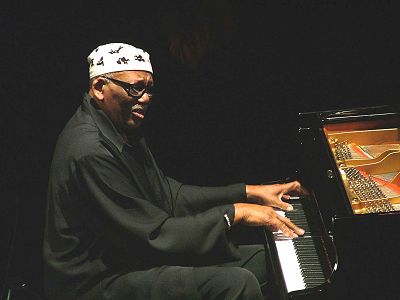
Randy Weston World-renowned pianist and NEA Jazz Masters Award recipient Randy Weston sat down with National Jazz Museum in Harlem, New York Co-Director Christian McBride before a full house at the museum's Visitor's Center, as the featured guest speaker of its Harlem Speaks interview series on April 16, 2009.

Engaged in a one-on-one forum with McBride, Weston discussed how the roots of Africa affected jazz--a topic he is well immersed in throughout most of the allotted 90-minute session before taking questions from the audience.

Recalling his first trip to the continent in 1961, he recalled playing in Nigeria with Lionel Hampton's band. Although he had never directly experienced African music, Weston said he felt as though he was at home. After his departure following that initial experience in the motherland, he described feeling as if [he] had never left Africa.

And Africa has never left Weston. Since then hes played 18 African countries, furthering his hybrid blending of classic American jazz with ancient African Rhythms.

The product of a Panamanian father and mother born in Virginia, the Brooklyn, NY native and lifelong resident enjoyed a rich musically diverse childhood from which he benefited from exposure to his Latin roots, the local jazz artists he came in contact with, and choir music in the black church on Sundays. When you lose your culture, you lose your soul Weston quoted, stressing what had been instilled in him as a youngster by his Afro-centric minded dad.

Surprisingly, while reminiscing on his musical dalliances during life on the Chitlin Circuit in the early 1950swhere he played everything from blues to burlesque halls; the internationally revered icon relayed he didn't think he'd be a professional musician.

Although his father was very strict and stipulated that he practice piano daily, he laughingly added that being over six feet tall by the age of 12 he had considered a career in basketball. That is, he added, until he learned the sport included a lot more running then he thought was involved in throwing the ball through a hoop. Weston didn't start performing full-time until he was 29 years old.

On that original tour to Africa, he said he got to see traditional African dancers and Savoy dancers from NYC, and conveyed it was then he discovered we were a global people--all connected. He cited his deep love for Africa, the ancestors and humanity became evident.

Although he is adamant that you can never know Africa, he believes you can learn from its traditional music. An acclaimed performer, composer and bandleader, Weston related that he tried to absorb the musical culture of the Gnawas, a group of musicians and dancers from Morocco with whom he still plays. Gnawa means black (men) and according to researchers refers to an ethnic group and religious order in Morocco descended in part from former slaves from Sub-Saharan Africa or migrated via caravans during the trans-Saharan trade. Weston later recounted putting together a three-day festival in Tangiers, where he lived and ran a nightclub for several years.

In spite of slavery, we created beauty, he observed. It was the way we survived oppression, birth, death, etc. That's our foundation--from that came all this creativity. While acknowledging the first song he heard about Africa was Caravan by popular orchestra leader Duke Ellington, Weston lauds famed African-American Big Band leader Count Basie as his first musical influence. Blues, he stated, is the essence of our music. Many Western scholars today recognize the parallels between African American music like the blues, which is rooted in Black American spirituals and Gnawa music. The similarities in these artistic and scriptural representations are said to reflect the shared experiences of many groups of the African Diaspora.

Weston responded largely to comments from the crowd requesting he speak about other well-known musicians hes collaborated with over his extensive career. Just as the discussion was running out of time, Weston stressed that we have to get music back into the educational system.

Wrapping up the evening, he acknowledged musical talent is a gift from the creator and music brings us all together. He also made reference to his forthcoming autobiography titled African Rhythms, scheduled for release in spring 2010.

5th Islamic Festival in Mértola, Portugal


The 5th Islamic Festival will take place May 21-24 at various locations in Beja, Baixo Alentejo, Portugal. Artists include Alqui-mia – Trifony (Morocco/ Spain), Umeya - Sabores de Al-Andaluz (Syria/Sudan/Spain), Grupo Feminino de Tetuan (Morocco), Les Boukakes (France/ Algeria/ Morocco/Italy), Basidou (Morocco/ Spain), Oojami (Turkey/UK)

Africa and Near East join in Umeya, the meeting between Sudanese Wafir Shaikheldin and Syrian Salah Sabbagh. Their winding rhythms will be the base for the dancing by the beautiful Mónica Sade, technically and expressively virtuoso dancer, specialized in the performance and teaching of classic Oriental Dance (belly dance or raks sharki) and saber dance.


Wafir's career throughout his 17 years in Spain has taken him through such eclectic experiences as early music with Eduardo Paniagua, Celtic pop with Hevia, Galician folk with Luar Na Lubre, Castilian folk with La Musgaña, Jewish music with Klezmer Sefardí and Radio Tarifa's rich flamenco fusion, as well as with his own artistic project. On stage, his communication ability, his inventiveness, sense of humor and empathy with the audience stand out.

Salah Sabbagh has been a percussionist for more that 30 years, specialized in Eastern instruments, like darbuka, riq and bendir, both playing as dance accompaniment as well as a soloist. During these years he has broaden his sensibility playing also some other traditional styles, like Egyptian and Balkan, touring throughout the Iberian peninsula and America. Umeya will perform on May 21st at the Mértola Castle at 21:30

SKELETONWITCH Taps Producer JACK ENDINO For New Album


Midwestern metal warriors SKELETONWITCH, who are currently on tour with AMON AMARTH, will begin recording their as-yet-untitled new album on June 14 with producer Jack Endino (NIRVANA, HIGH ON FIRE, TOXIC HOLOCAUST). The CD will be tracked in Seattle at both Studio Litho (owned by PEARL JAM guitarist Stone Gossard) and Endino's own Soundhouse Recording.

"We're stoked to be working with Jack 'and Dino' Endino," says guitarist Nate Garnett. "We hope he will help us achieve a sound that is more natural, organic and powerful, as he did with HIGH ON FIRE. The new material is coming along great. We can't wait to see it come to fruition!"

Throughout the first few months of 2009, SKELETONWITCH has continued to tour extensively in support of its latest album, "Beyond The Permafrost". In recent weeks, the group delivered a show-stealing performance at the inaugural Scion Rock Fest, played multiple South By Southwest (SXSW) showcases with labelmates KYLESA and crossed the country with AMON AMARTH.

"Scion was fucking killer!" Garnett says. "It was one of the best festival lineups of the last 10 years, the organizers treated all the bands like kings and we got to hang out with some good friends in BARONESS, TOXIC HOLOCAUST, HIGH ON FIRE and WITHERED."

As for SXSW, "We had a killer time," says guitarist Scott Hedrick. "Playing two shows a day and getting drunk twice a day was a new challenge, but I think we kicked its ass. Everyone who told us metal doesn't go over well at SXSW obviously didn't attend Full Metal Texas, The Tone Deaf showcase or the ABSU show!"

After the AMON AMARTH tour wraps up in Ft. Lauderdale, Fla. on May 2, SKELETONWITCH will perform two additional Florida shows with GOATWHORE. They will also play regional dates later in May to debut new material.

"The AMON AMARTH tour has been incredible," Garnett says. "We get to hang with some of our best friends in GOATWHORE, and our new friends, the AMON AMARTH dudes, rule! Odin made it possble! Grow a beard!"

Since signing with Prosthetic in 2007, SKELETONWITCH has performed more than 300 concerts and toured with a who's who of heavy metal, including DANZIG, DIMMU BORGIR, MUNICIPAL WASTE, NACHTMYSTIUM, JOB FOR A COWBOY, DARKEST HOUR, CEPHALIC CARNAGE and many more.

KK has sung 3,500 jingles in 11 Indian languages!

Delhi boy Krishna Kumar Kunnath, popularly known as KK, made it big in Bollywood with the song Tadap tadap in hit film Hum Dil De Chuke Sanam; he says he sang 3,500 jingles before getting his big break.

He has crooned various chartbusters like Awarapan (Jism) and Ajab si (Om Shanti Om), but he didn't want to be a playback singer initially.

"I used to sing since childhood but initially I wanted to become a doctor. I had never decided to be a playback singer, but I eventually landed up doing just that. I sang around 3,500 jingles in 11 Indian languages before I got my first break," KK told IANS over phone.

The singer's first Bollywood song was Chhod aye hum from the film Maachis, but it was Tadap tadap that brought him into limelight.

Later he made his presence felt with songs like Tu aashiqui hai (Jhankaar Beats), for which he received a National Award, It's the time to disco (Kal Ho Naa Ho), Tu hi meri shab hai (Gangster - A Love Story), and Khuda jaane (Bachna Ae Haseeno) among others.

Unlike many composers and singers, who feel reality shows have made it easier for budding artists to enter Bollywood, KK feels every one still has to struggle to mark one's presence in the film world.

"I don't think it is easier even now for budding singers to get a chance in the industry. They too have to struggle a great deal. Definitely different sounds and diverse voices are being recognised nowadays, so if someone's got a unique voice there are more chances for him or her to get a chance in Bollywood," said KK, who has been a part of Hindi filmdom for 13 years now.

The singer feels that Bollywood music today appeals to all but is majorly "youth-centric".

"The major chunk of music churned out today is youth-centric. But it is not that melodies that appeal to other age groups are not being created at all. Today music in Bollywood has become diverse," he said.

An alumni of Delhi's Mount St Mary school, KK was recently in the capital for a musical evening in the school and was more than happy to be back there.

"I was feeling on top of the world. It's so nice to be back here to perform. I sang for the students, my teachers and everyone there. I have no words to explain how I felt," he said.

So what is the best part of performing live? "Interacting with the audience, to know how they feel and the instant gratification that you receive when you perform live, is just great. The feeling of connecting with the audience gives a singer an all-time high," he said.

KK has his hands full at the moment with songs in John Abraham-starrer New York, Mukhesh Bhatt's Jashn and Sanjay Leela Bhansali's next movie, among others.

DM Stith

Singer-songwriter and visual artist DM Stith, a.k.a. David Michael Stith, was born in 1980 in Buffalo, N.Y., into a very musical family. His official biography lists his father as a former church-choir director/college wind-ensemble director; his grandfather a Cornell music professor emeritus; his mother a pianist; his sisters opera singers/piano and timpani players/tap dancers. Collaborations include Shara Worden (My Brightest Diamond), Sufjan Stevens, and Sebastian Krueger. The Brooklyn-based Stith recently recorded his first full-length project, Heavy Ghost, for Asthmatic Kitty Records, "in bedrooms, churches, kitchens and instrumental rehearsal halls around the North East," he writes. Stith's alternative-inspired classical edge is shaped by rushes of imagination and a mysterious elegance. The title "Braid of Voices," from his 2009 release Heavy Ghost, will reel you into its labyrinth of beauty. Currently on tour.